POE 1: Redefining Complexity and Player Choice in Action RPGs
Path of Exile 1, commonly referred to as POE 1, has earned its reputation as one of the most intricate and rewarding action RPGs ever created. Unlike many games that prioritize instant gratification or simplified mechanics, POE 1 emphasizes depth, strategic decision-making, and player-driven customization. Its complex systems, dark atmosphere, and enduring community support have made it a title that continues to captivate both new and veteran players years after its release.
At the core of POE 1 is its flexible skill gem system. Instead of restricting abilities to specific classes, players can equip active skills through skill gems, which can be enhanced and modified by support gems. This allows for virtually limitless build possibilities, enabling players to craft unique characters that align with their personal playstyle. Every gear choice, link, and gem selection carries strategic importance, transforming character building into a highly creative and thoughtful process rather than a straightforward progression.
The passive skill tree further exemplifies the game’s depth and focus on player agency. While initially overwhelming, it rewards long-term planning and a deep understanding of game mechanics. Each node contributes to damage, defenses, or utility, and early decisions can significantly impact a character’s effectiveness in the mid- and late-game. Navigating the tree is both a tactical and creative challenge, giving players a profound sense of ownership over their builds. Mastering the passive skill tree is often regarded as one of POE 1’s most satisfying experiences, reinforcing the game’s emphasis on strategic thinking.
Combat in POE 1 is dynamic, fast-paced, and challenging. Players encounter diverse enemies, environmental hazards, and complex boss fights that demand careful observation, positioning, and skillful execution. Unlike simpler ARPGs, success is rarely achieved through brute force alone; it requires understanding mechanics, reacting to threats, and optimizing builds. Boss encounters, in particular, test a player’s ability to adapt and strategize, making victories feel rewarding and failures instructive.
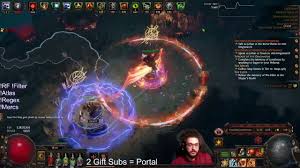 The endgame of POE 1 is equally compelling, offering nearly limitless replayability through its mapping system. Players can modify maps with affixes that increase difficulty and rewards, tailoring challenges to their desired level of risk. Seasonal leagues further enhance longevity by introducing fresh mechanics, content, and gameplay twists, keeping even veteran players engaged while preserving the game’s core systems. This combination of strategic combat, customizable builds, and evolving content ensures that POE 1 remains compelling long after the main story is complete.POE 1 Items’s dark and immersive world enhances its intricate systems. The narrative emphasizes survival, consequence, and danger, creating tension and meaning in every encounter. Exploration, combat, and character progression all feel significant within this grim, unforgiving environment, deepening the sense of accomplishment with every success.
In conclusion, POE 1 stands as a benchmark in action RPG design. Its combination of depth, strategic gameplay, and player freedom creates an enduring and highly rewarding experience, demonstrating that complexity and choice can define a game that remains relevant and captivating for years.
At the core of POE 1 is its flexible skill gem system. Instead of restricting abilities to specific classes, players can equip active skills through skill gems, which can be enhanced and modified by support gems. This allows for virtually limitless build possibilities, enabling players to craft unique characters that align with their personal playstyle. Every gear choice, link, and gem selection carries strategic importance, transforming character building into a highly creative and thoughtful process rather than a straightforward progression.
The passive skill tree further exemplifies the game’s depth and focus on player agency. While initially overwhelming, it rewards long-term planning and a deep understanding of game mechanics. Each node contributes to damage, defenses, or utility, and early decisions can significantly impact a character’s effectiveness in the mid- and late-game. Navigating the tree is both a tactical and creative challenge, giving players a profound sense of ownership over their builds. Mastering the passive skill tree is often regarded as one of POE 1’s most satisfying experiences, reinforcing the game’s emphasis on strategic thinking.
Combat in POE 1 is dynamic, fast-paced, and challenging. Players encounter diverse enemies, environmental hazards, and complex boss fights that demand careful observation, positioning, and skillful execution. Unlike simpler ARPGs, success is rarely achieved through brute force alone; it requires understanding mechanics, reacting to threats, and optimizing builds. Boss encounters, in particular, test a player’s ability to adapt and strategize, making victories feel rewarding and failures instructive.
The endgame of POE 1 is equally compelling, offering nearly limitless replayability through its mapping system. Players can modify maps with affixes that increase difficulty and rewards, tailoring challenges to their desired level of risk. Seasonal leagues further enhance longevity by introducing fresh mechanics, content, and gameplay twists, keeping even veteran players engaged while preserving the game’s core systems. This combination of strategic combat, customizable builds, and evolving content ensures that POE 1 remains compelling long after the main story is complete.POE 1 Items’s dark and immersive world enhances its intricate systems. The narrative emphasizes survival, consequence, and danger, creating tension and meaning in every encounter. Exploration, combat, and character progression all feel significant within this grim, unforgiving environment, deepening the sense of accomplishment with every success.In conclusion, POE 1 stands as a benchmark in action RPG design. Its combination of depth, strategic gameplay, and player freedom creates an enduring and highly rewarding experience, demonstrating that complexity and choice can define a game that remains relevant and captivating for years.
Hey, dit soort diepe games met constante spanning herken ik goed, dat gevoel van risico en beloning trekt mij ook aan. Na een lange sessie waarin alles net misliep, wilde ik even iets anders en kwam ik toevallig bij boomzinoterecht. Het casino heeft speciale voordelen voor spelers uit België, wat het laagdrempelig maakte om te proberen. Eerst had ik een reeks verliezen op een slot, daarna nam ik bewust iets meer risico en pakte ik ineens een mooie winst. Die mix van spanning en beloning maakt het voor mij een fijne manier om te ontspannen.